Nom vernaculaire
Pacanier, Noix de Pécan
Famille
Juglandaceae
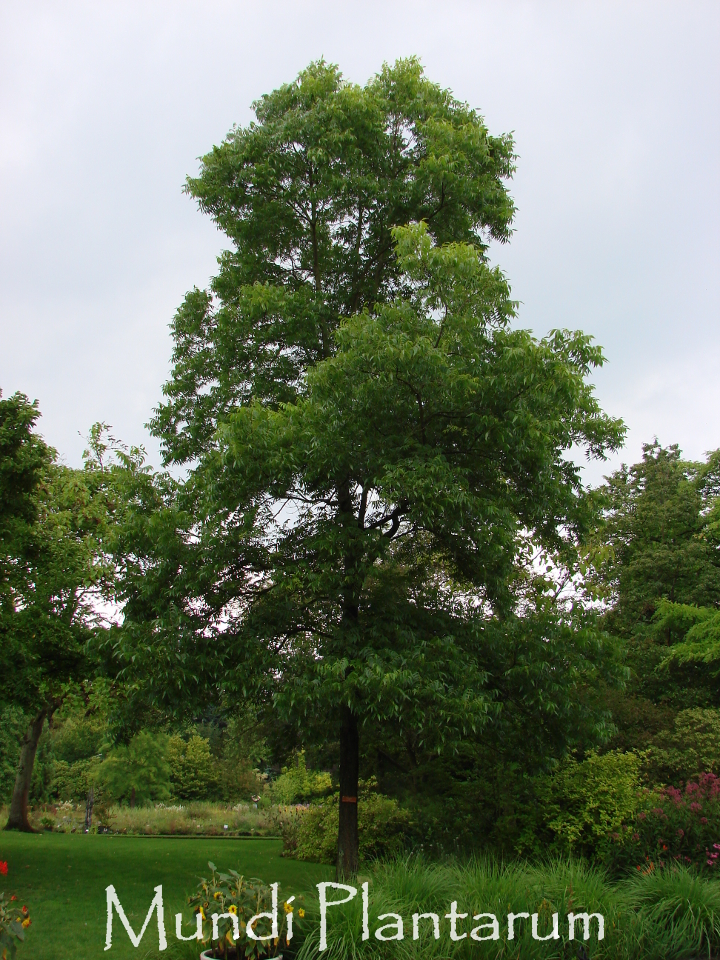
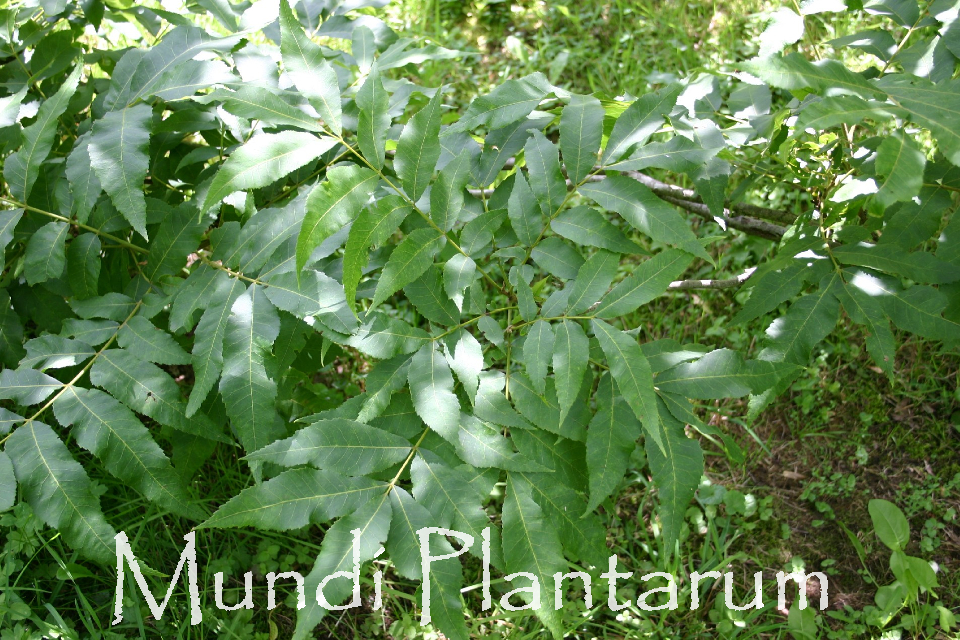
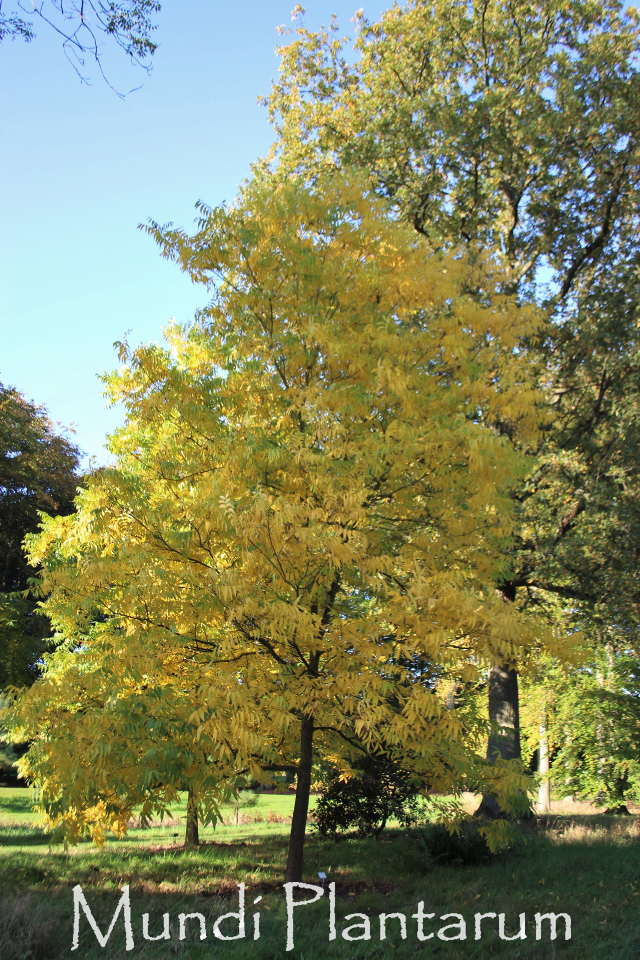
Pecan nut. Tree of the walnut family with a slender crown and yellow leaves in autumn. Height of 30m.
Classification

Trees and shrubs
Climat
Zone 7: from -17°C to -12°C
Couleur de feuille
Exposition

Sunny

Part shade
Hauteur minimum
2000cm
Hauteur max
3000cm
Encombrement min
1000cm
Encombrement max
1500cm
Intérêts remarquables

Foliage
Période

In autumn
Type de sol

Limestone

Neutral
Utilisation ailleurs

Food - Fruit
Utilisation au jardin

Massif
Park
General description
- Origin
- Native to North America.
- Climate
- Withstands -15°C
- Exposure
- Sunny.
- Growth
- Normal.
- Propagation
- Sowing.
- Use
- The pecan tree can be cultivated both as an ornamental tree and as a fruit tree.
General physiology
- Dimensions
- Mature height 30m.
- Habit
- Large tree.
Leaves
- Shape
- Elongated leaves, comprising 11 to 13 leaflets.
- Colour
- Green in colour, they then take on a lovely golden hue in the fall.
- Note
- Its leaves are deciduous.
Flowers
- Flowering time
- March to May.
August-November. - Shape
- From the end of March, the male flowers appear as long, yellow spikes. These are followed by the formation of young shoots and then by inconspicuous female flowers. Although the male and female flowers are borne on the same tree, their flowering periods differ.
- Colour
- Light yellow.
- Note
- If the goal is to obtain fruit, it is advisable to plant two plants to allow for cross-pollination and better fruiting.
Fruits
- Shape
- The fruit of the pecan tree is a drupe, with a fleshy outer shell.
- Colour
- Green.
- Note
- Requires long, hot summers to bear fruit. The pecan nut, with a taste similar to a walnut, has a smoother kernel. Fruiting occurs on 5-year-old trees.