Famille
Oleaceae
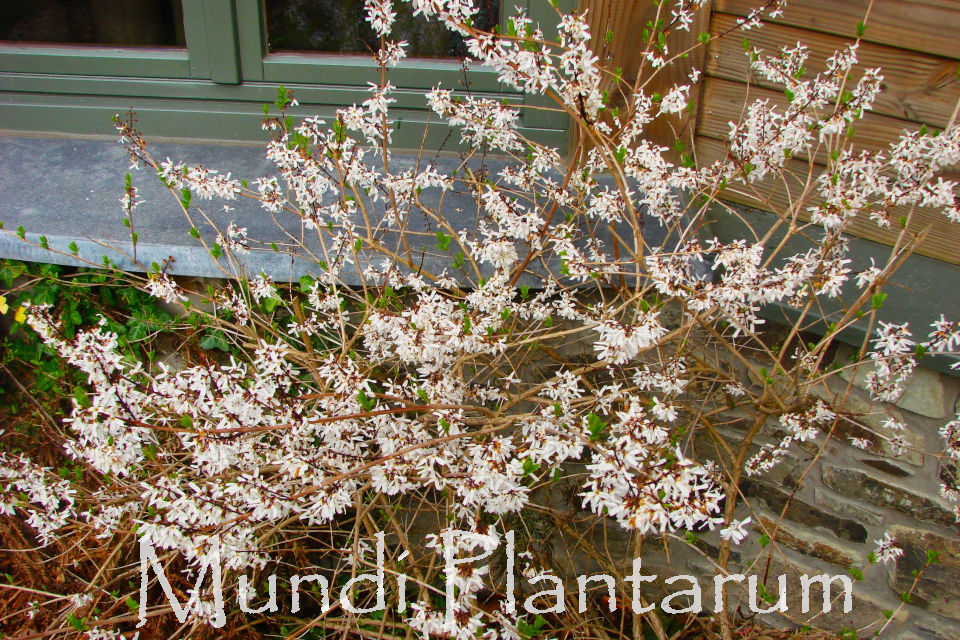
Shrub of Korean origin with spherical port and arched branches. Called white forsythia due to its white flowers from February to April before the leaves. Height 1,5m.
Classification

Trees and shrubs
Climat
Zone 7: from -17°C to -12°C
Couleur de feuille
Couleur de fleur
Exposition

Sheltered winds

Sunny

Part shade
Hauteur minimum
150cm
Hauteur max
200cm
Encombrement min
100cm
Encombrement max
200cm
Intérêts remarquables

Flower
Période

In spring
Type de sol

Neutral
Utilisation au jardin

Massif

Parterre
General description
- Origin
- Korea, introduced in 1924.
- Climate
- Resistant to -15 ° C. Requires a protections the first years against the cold.
- Exposure
- Full sun and warm place, protect from winds, against a warm wall.
- Soil
- Ordinary, well drained. Not too dry and cool.
- Growth
- Slow.
- Pathology
- No known disease.
- Propagation
- By mid-August cuttings in July or by hardwood cuttings in October.
- Pruning
- After blooming, prune all branches to 1/4 of their length, over a vigorous bud, to force the plant to reform new shoots near the base.
General physiology
- Dimensions
- Height from 1m to 2m.
- Habit
- Arched shrub, can be guided as climbing.
- Trunk
- Multi stems.
- Branches
- Flexible and strongly arched.
Leaves
- Shape
- Simple, opposite, whole, oval, 5 to 7cm long.
- Colour
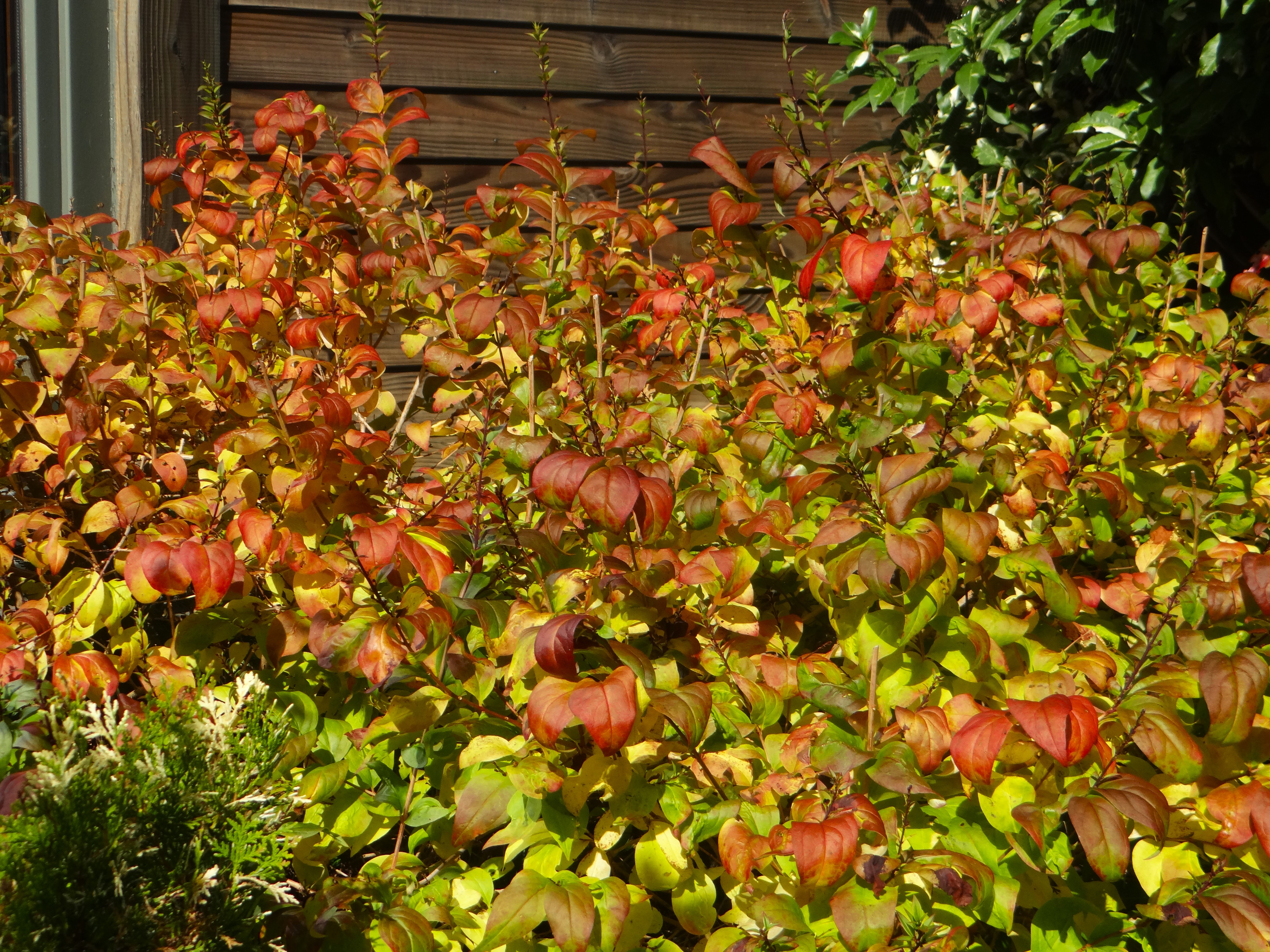
- Green, sometimes purple in autumn.
- Note
- Caduque, similar to that of the Abelia. They appear after the leaves.
Flowers
- Flowering time
- Winter flowering from February to April, depending on the region. The flowers appear before the leaves.
- Shape
- Simple flowers with 4 soft petals, abundant all around the branches.
- Colour
- White, green button.
- Note
- Perfumed.
Fruits
- Shape
- Spherical samare with a single seed.
- Colour
- Green, sometimes pink in the center, then brown.
- Seeds
- Round and flat, single in a fruit.